
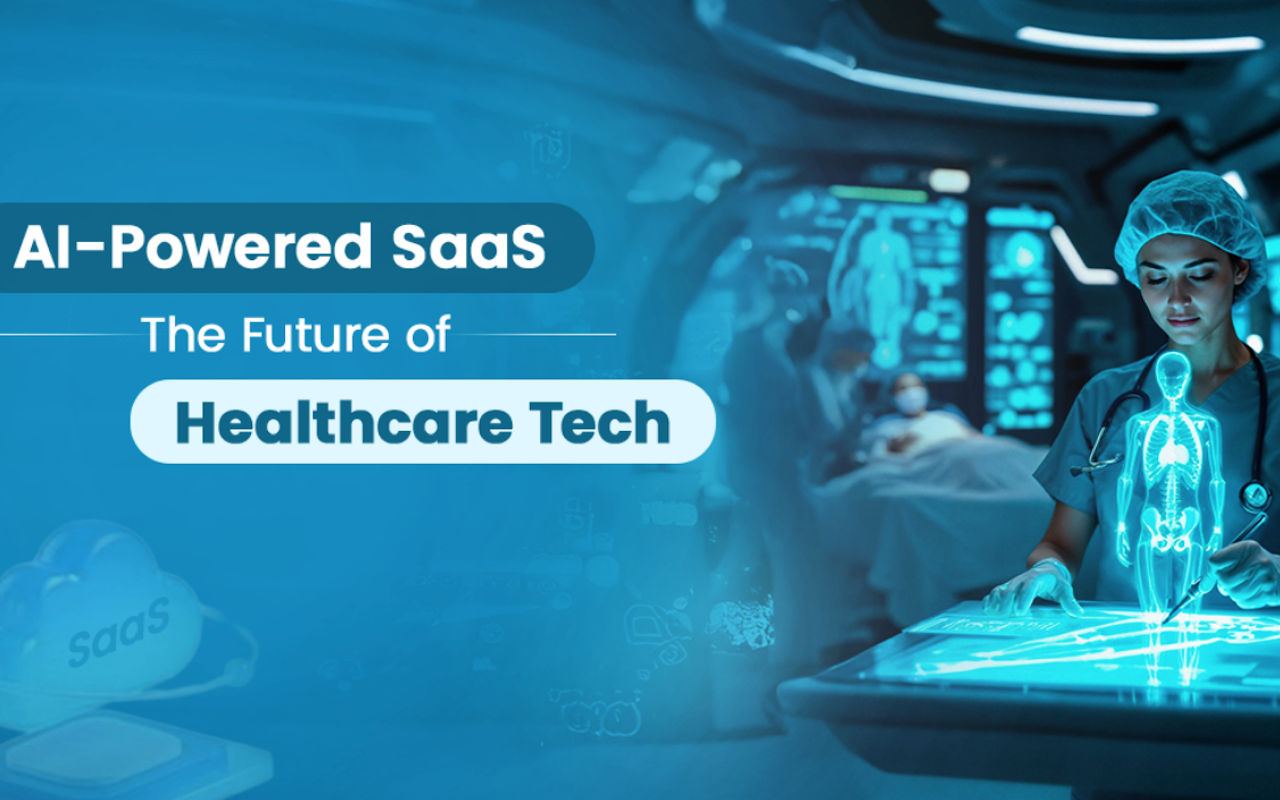
Imagine a hospital or clinic where doctors no longer spend hours reviewing patient notes or completing documentation. Instead, they can have natural conversations while AI listens, summarizes, and updates records in real time. Patients using telehealth platforms may interact with intelligent digital companions that track symptoms, forecast potential issues, and guide them toward appropriate care.
In the new age of AI and SaaS, healthcare technology is undergoing a major transformation. This combination gives healthcare providers a competitive advantage through automation, real-time insights, and scalable cloud delivery. AI-enabled SaaS platforms allow healthcare organizations to modernize faster and more efficiently than traditional approaches ever allowed.
As clinics and hospitals rethink their digital strategies, many are turning toward custom healthcare software development that leverages AI-driven SaaS capabilities. This shift enables more flexible, intelligent, and adaptive solutions that align with the pace and complexity of modern healthcare. The result is smarter, more responsive healthcare applications designed to meet real clinical needs.
This comprehensive blog outlines why AI and SaaS matters in healthcare, its technical foundations, and the challenges that teams should consider in modern healthcare software development.
Why AI and SaaS Matters in Healthcare Software Development
Here are some of the most important reasons AI and SaaS is becoming a driving force in this space:
Scalability with Intelligence
Traditional healthcare software models often involve high upfront costs, complex maintenance, and rigid architectures. AI-powered SaaS offers a more accessible, subscription-based model that reduces licensing expenses and improves flexibility.
AI enhances SaaS platforms by adding:
- Predictive analytics
- Natural language processing (NLP)
- Automated workflows (scheduling, billing, documentation, data input)
This combination dramatically reduces operational overhead by automating repetitive tasks. As cloud-native solutions, SaaS platforms support elastic scaling, enabling healthcare organizations to expand seamlessly as their needs evolve.
Improved Patient and Provider Experience
AI and SaaS greatly enhances both patient and clinician journeys.
AI chatbots and virtual assistants can:
- Triage basic medical questions
- Offer guidance throughout telehealth platforms
- Provide real-time support during patient interactions
For clinicians, AI voice tools can:
- Transcribe consultations
- Surface key medical insights
- Generate clinical notes automatically
AI medical note-taking and transcription powered by NLP has seen significant growth since 2024, with major tech companies and emerging startups competing for a share of what is projected to become a $26 billion AI healthcare market.
Compliance and Interoperability Made Easier
Healthcare frequently struggles with fragmented data—from EHRs, billing tools, labs, and wearable devices. AI-enabled SaaS solutions built with strong APIs help unify these data sources, improving data consistency, anomaly detection, and care coordination.
Custom-built healthcare SaaS applications can incorporate:
- Encryption
- Role-based access control
- HIPAA, GDPR, and other regulatory requirements
Compliance becomes more manageable when built into the SaaS architecture from the start.
Technical Foundations of AI and SaaS in Healthcare Software Development
Here’s how AI-integrated SaaS healthcare solutions are typically built:
1. Planning
- Stakeholders, including clinicians, administrators, and compliance teams, define goals.
- Data planning includes inputs from EHRs, wearables, labs, and more.
- Compliance frameworks (HIPAA, GDPR) are mapped early.
- SaaS delivery models (single-tenant, multi-tenant, subscription tiers, usage-based) are selected.
2. Design and Architecture
- Teams design microservices for authentication, data ingestion, and analytics.
- UI/UX designers create intuitive portals and dashboards.
- Data schemas organize demographic data, vitals, and notes.
- AI capabilities are built in, such as NLP for note-taking or predictive scoring.
3. Development and Integration
- Backend teams build cloud infrastructure, databases, and external integrations.
- AI models are trained on de-identified datasets to meet compliance requirements.
- Frontend developers create apps and dashboards connected to the SaaS backend.
- CI pipelines ensure quality, accuracy, and security throughout development.
4. Testing and Validation
- Functional testing covers features like scheduling or AI-generated notes.
- AI validation checks accuracy, bias, and hallucination prevention.
- Security testing ensures encryption, access control, and breach prevention.
5. Deployment and Maintenance
- Solutions are deployed as SaaS products with cloud-based environments.
- Teams monitor performance, usage patterns, and AI outputs.
- Regular updates include model retraining, UX improvements, and new feature rollouts.
Key Challenges and Considerations
Bringing AI and SaaS into healthcare software development is powerful, but not without challenges. Key considerations include:
Data Privacy
Healthcare data is highly sensitive. Ensuring compliance with HIPAA, GDPR, and other standards is essential.
Model Reliability
AI models require regular validation and audits to avoid bias and ensure trustworthy outputs.
Regulations
AI tools that influence clinical decision-making must follow strict regulatory expectations.
Change Management
Healthcare professionals may resist new technology. Strong UX, training, and clear benefits help build trust and adoption.
Cost annd ROI
While SaaS reduces upfront costs, AI-enabled healthcare solutions require investment in talent, infrastructure, and continuous improvement. ROI should be clearly defined in terms of efficiency, error reduction, and patient outcomes.
Final Thoughts
With the collaboration of AI and SaaS, digital transformation in healthcare is accelerating rapidly. Service providers are shifting to smarter cloud-based tools, increasing the demand for flexible and intelligent solutions. That’s when healthcare custom software development, and broader app development healthcare, plays a key role in helping organizations scale their platforms and support patient-centric care.
For healthcare tech founders, digital leaders, and innovators, now is an ideal time to embrace AI and SaaS. This shift is reshaping how healthcare is delivered and profoundly influencing the future of digital care.
Share this post
Leave a comment
All comments are moderated. Spammy and bot submitted comments are deleted. Please submit the comments that are helpful to others, and we'll approve your comments. A comment that includes outbound link will only be approved if the content is relevant to the topic, and has some value to our readers.
Comments (0)
No comment