
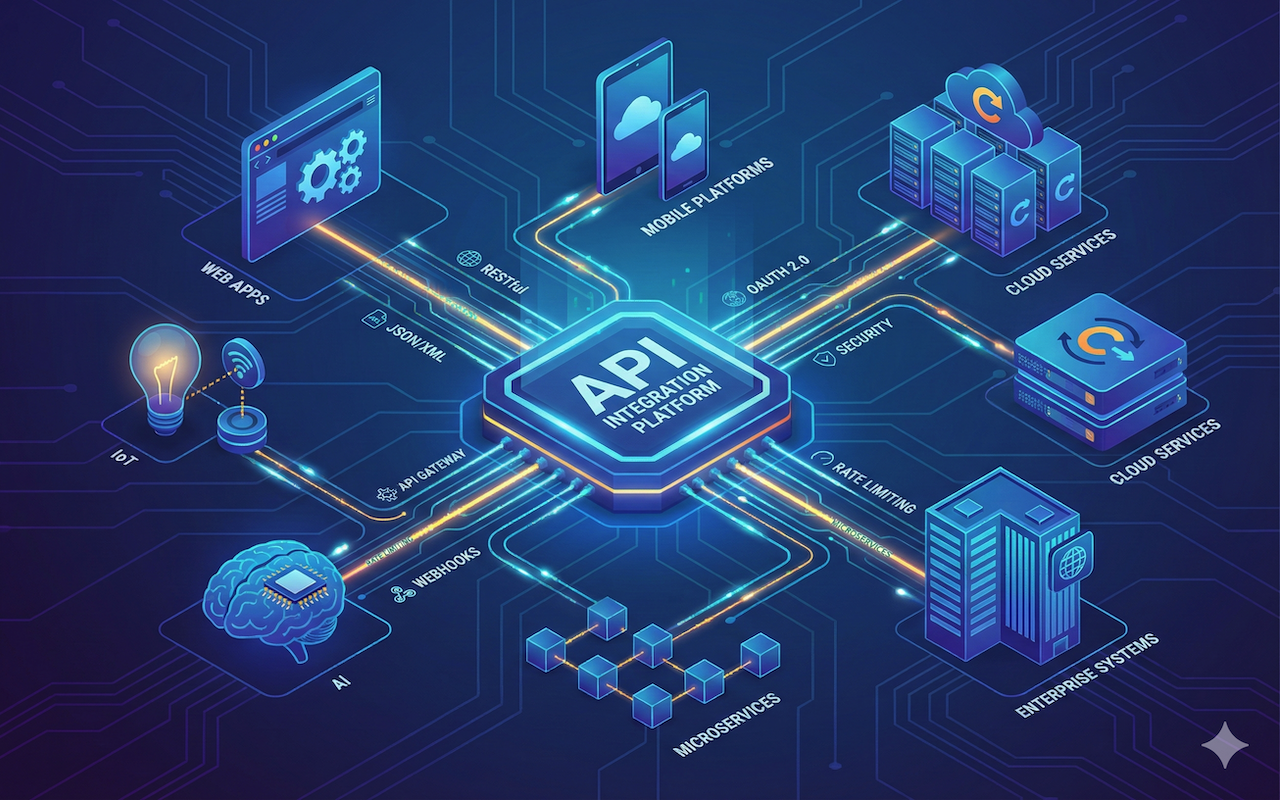
In today’s software-driven world, API development and integration has become a core part of modern application engineering. APIs allow web apps, mobile platforms, cloud services, and enterprise systems to communicate smoothly. As organizations grow, the need for strong API design principles, reliable security, and consistent integration workflows increases. Developers who master these skills gain a clear advantage in today’s fast-moving tech environment because they build systems that are stable, efficient, and secure.
Why API Development and Integration Matters in Modern Software
APIs are the connective layer of today’s digital ecosystem. As applications become more distributed, the need for predictable and stable communication grows. Effective API development and integration helps teams create modular systems that work well together and remain compatible over time. Beyond simplicity, APIs make it easier to standardize data access, improve performance, and reduce engineering effort as systems scale.
With trends like cloud computing, microservices, AI, and IoT, strong API design is no longer optional. Developers must understand best practices that lead to secure, scalable, and future-ready API ecosystems.
Follow Strong API Design Principles
Reliable APIs always start with thoughtful design. Good API design is predictable and easy to understand, which reduces friction for developers who use your system.
Key API design principles include:
- Consistency: Use predictable structures across all endpoints.
- Clarity: Avoid vague or confusing names.
- Usability: Create a smooth developer experience.
- Scalability: Ensure the API can grow with new requirements.
Following these principles makes your API development and integration efforts more sustainable and easier to maintain over time.
Use RESTful Architecture for Simplicity and Scale
REST remains a popular architecture because it is simple, scalable, and easy to adopt. When applying RESTful architecture, your endpoints should use resource-based patterns, standard HTTP methods, and proper status codes.
REST relies on:
- JSON and XML data formats for easy data handling
- Stateless communication for reliable performance
- Clear URI-based resources that simplify structure
REST works for most systems, but alternatives like GraphQL or gRPC may suit complex use cases better.
Select the Right Data Serialization Methods
Most APIs use JSON today, but some integrations need XML, Protobuf, or other formats. Your goal is to choose a format that provides speed, readability, and compatibility.
Good data serialization methods improve:
- Response efficiency
- Client compatibility
- Parsing performance
Balancing readability and performance is important, especially when handling large datasets.
Implement Strong Authentication Methods
Security is a major part of API development and integration. Every API must verify who is accessing it and ensure only trusted users or systems can connect.
Common authentication methods include:
- OAuth 2.0 for secure delegated access
- API keys for simple authorization
- JWT tokens for scalable, stateless sessions
- Mutual TLS for strict, high-security environments
OAuth 2.0 is widely preferred because it offers flexible and powerful authorization flows.
Apply Security Best Practices for APIs
After authentication, broader security controls protect your API from attacks such as injection attempts, data theft, replay attacks, and DDoS.
Key API security best practices:
- Always use HTTPS
- Validate and sanitize inputs
- Encrypt sensitive data
- Avoid unnecessary data exposure
- Use rate limiting for protection
Security works best when it is built into your API from day one.
Implement Rate Limiting Strategies
Rate limiting prevents misuse and protects your API from heavy or malicious traffic. It ensures fair use and helps maintain stable performance.
Common rate limiting strategies include:
- User-based limits
- IP-based limits
- Tiered throttling for paid plans
Many API gateways and load balancers offer built-in rate limiting features.
Use API Versioning to Avoid Breaking Changes
API versioning protects existing client applications when you update features or fix issues. Without versioning, even small changes could break integrations.
Popular versioning approaches include:
- URL versioning (e.g., /v1/products)
- Header-based versioning
- Query parameter versioning
API versioning keeps API development and integration flexible while ensuring older clients stay stable.
Handle Errors and Status Codes Gracefully
Clear error handling makes your API more professional and easier to troubleshoot. Developers should instantly understand what went wrong.
Best practices include:
- Using standard HTTP status codes
- Returning human-readable error messages
- Offering optional documentation links
- Using structured error formats like JSON
Consistent error handling improves the overall experience for API consumers.
Follow API Documentation Best Practices
An API is only useful if developers can understand how to use it. Strong documentation reduces support requests and speeds up integration.
Good API documentation includes:
- Clear endpoint descriptions
- Data models
- Sample requests and responses
- Error code explanations
- Authentication instructions
Tools like Swagger or OpenAPI help keep documentation accurate and easy to maintain. Clear documentation strengthens API development and integration by reducing confusion and integration delays.
Test and Monitor APIs for Performance and Stability
Testing and monitoring help prevent failures and ensure your API runs smoothly in production environments.
Important testing methods include:
- Unit testing
- Integration testing
- Performance testing
- Security testing
- Contract testing
After deployment, monitoring tools should track:
- Latency
- Uptime
- Throughput
- Error rates
Strong testing and monitoring make your API reliable, especially under heavy load.
Use an API Gateway for Better Control
An API gateway provides a central entry point for all API traffic. It helps implement caching, routing, authentication, logging, and throttling.
Key benefits of API gateway implementation:
- Unified security
- Easier scaling
- Centralized analytics
- Faster responses through caching
- Smooth integration with microservices
Gateways are essential when managing complex environments that rely on advanced API Development and Integration workflows.
Apply Webhook Integration Techniques for Real-Time Events
Webhooks enable real-time communication between applications. They help services react instantly to events like payments, updates, or user actions.
Webhook best practices include:
- Using signature validation
- Adding retry logic
- Logging all events
- Sending lightweight payloads
Webhooks are vital for automation and event-driven workflows.
Use Performance Optimization Techniques for Faster APIs
Fast APIs improve user experience and ensure smooth integrations. Poor performance creates slowdowns and complicates system communication.
Helpful optimization techniques include:
- Caching repeated requests
- Optimizing database queries
- Using asynchronous processes
- Compressing content
- Reducing payload sizes
These techniques help your API handle heavy traffic without losing speed.
Conclusion
API development and integration form the backbone of modern digital systems. As applications become more distributed and interconnected, building APIs with strong design principles, reliable security, and scalable performance is essential. By following best practices—such as using RESTful architecture, implementing strong authentication, documenting thoroughly, and optimizing for speed—developers can create systems that are robust, future-ready, and easy to maintain.
Whether you’re enhancing an existing platform or building new services from the ground up, focusing on thoughtful API design and consistent integration workflows will ensure long-term stability and seamless collaboration across applications.
 FAQs
FAQs
The most important part is designing clear, consistent APIs that support scalability and security. Strong authentication and good documentation also help build reliable long-term integrations.
RESTful architecture is popular because it is simple, resource-focused, and aligns with web standards. It uses standard HTTP methods and scales well across distributed systems.
API gateways improve performance by providing caching, authentication, routing, and rate limiting in one place. This reduces the load on backend services and speeds up client responses.
API versioning prevents breaking changes during updates. It ensures older clients stay stable while newer clients benefit from updated features.
Featured Image generated by Google Gemini.
Share this post
Leave a comment
All comments are moderated. Spammy and bot submitted comments are deleted. Please submit the comments that are helpful to others, and we'll approve your comments. A comment that includes outbound link will only be approved if the content is relevant to the topic, and has some value to our readers.
Comments (0)
No comment