Data loss is an error condition in information systems that causes stored information to be destroyed by some critical failure or neglect while in storage, transmission, or processing. Most of these systems would implement some form of backup or disaster recovery equipment to both prevent or recover from data loss.
Sir Tim Berners-Lee, inventor of the World Wide Web and the Internet as we know it today, envisioned a resource based on the philosophy that information should be freely available to anyone. The Internet was born of necessity and curiosity and experimentation, and free-flowing information became universally ingrained in the zeitgeist of Internet users from the beginning.
Learn about the stealthy threat of Cross-Site Request Forgery (CSRF) attacks and how they exploit web application authentication. Discover how CSRF vulnerabilities can be identified and safeguarded with unique tokens, protecting critical user data in online banking, social media, and beyond.
Carriage Return and Line Feed (CRLF) are special character elements typically embedded in Hypertext Transfer Protocol (HTTP) headers and some other software code. The inclusion of these character elements is to denote an End of Line (EOL) marker. These character elements are actually very common as many protocols of the Internet Protocol (IP) Suite, such as HTTP, MIME, and NNTP, use them to discretely split the text into elements. As such, CRLF injection is when an attacker can inject a sequence of CRLF into one of these protocols or software applications; such as an HTTP stream. This is one of the attacks most common uses and as such, has the alternative names of HTTP Response Splitting and Neutralization of CRLF Sequences in HTTP Headers.
Firstly, we must define what a buffer is. A buffer is an allocated section of memory which can hold anything from a string of characters to an array of integers. That being the case, a buffer overflow (or overrun) is what happens a buffer with a fixed-length receives more data than what it can handle. In this case, the extra data has to be stored somewhere and spills over into an adjacent space in memory which can corrupt or overwrite the data stored there. These overflows usually result in a system crash; however, they also create opportunities for an attacker to run some malicious code or manipulate coding errors. The success of these attacks are very high as most programming languages, such as C, C++, and Fortran are vulnerable to these types of attacks.
It's now very easy doing online transactions on the go than ever before. Thanks to a mobility of devices and smartphones. However, if you are a person who likes connecting to free public Wi-Fi hotspots you need to be careful or avoid it altogether.
Cybersecurity deals with the protection of computer systems, networks, and data from cyber theft and damage to hardware, software and information. Cybersecurity is equally important for companies as well as individuals.
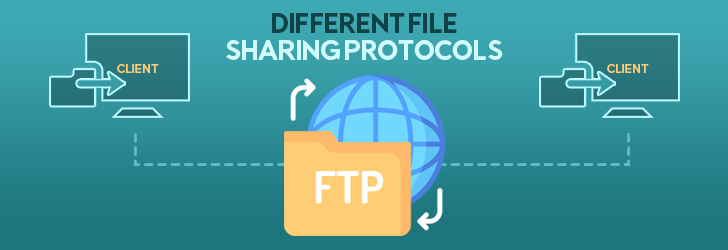
File sharing is something which is part of our daily activities. This is also commonly referred to as P2P or Peer-to-Peer sharing. This could be sharing files between two nodes in a network or between a client and a server or between two nodes not within the same network. Any multi-user environment will require a file sharing mechanism.
Since the WWW (World Wide Web) came into this world in 1990, fast growth is taking place in the professional, criminal and personal use of e-mails, the Internet, social networks, and computers. Those devices capture and create huge amounts of digital data which are stored in different places than most users realize. A user has less opportunity of terminating details-trails perfectly than of committing the great crime. Same as the fingerprint left on the chair adjustment of a vehicle used in the crime, a rough digital evidence (Fingerprint) always kept on speaking the truth.
InterPlanetary File System (IPFS) is a protocol which seeks to replace the Hypertext Transfer Protocol (HTTP) with the goal of having a truly decentralized Internet by changing how data is communicated across the World Wide Web (WWW). This is accomplished by a decentralized network where all devices on the network have hypermedia content stored and content-addressed for sharing. This process makes it similar to the World Wide Web (WWW), however, it is very different as it creates another network which works alongside a file system. The protocol was realized in 2014 by using the Bitcoin blockchain protocol and network as its framework which allowed it to store immutable data, handle duplicated files, and obtain addressing information across the network. This led to achieving faster speeds, more reliable performance, and better security than HTTP and HTTPS although it is not popular nor commonplace.
At IPLocation.net, we prioritize the privacy and security of our visitors. We want you to feel confident and comfortable when browsing our website. That's why we want to assure you that we do not sell or share any personal information collected from our website.
Your trust is important to us. Whether you're browsing our site for information, or engaging with our content, rest assured that any data you provide remains strictly confidential. We adhere to stringent privacy policies and comply with all relevant regulations to safeguard your information.
Your privacy matters, and we are committed to maintaining the highest standards of data protection. If you have any questions or concerns regarding our privacy practices, please don't hesitate to reach out to us.