
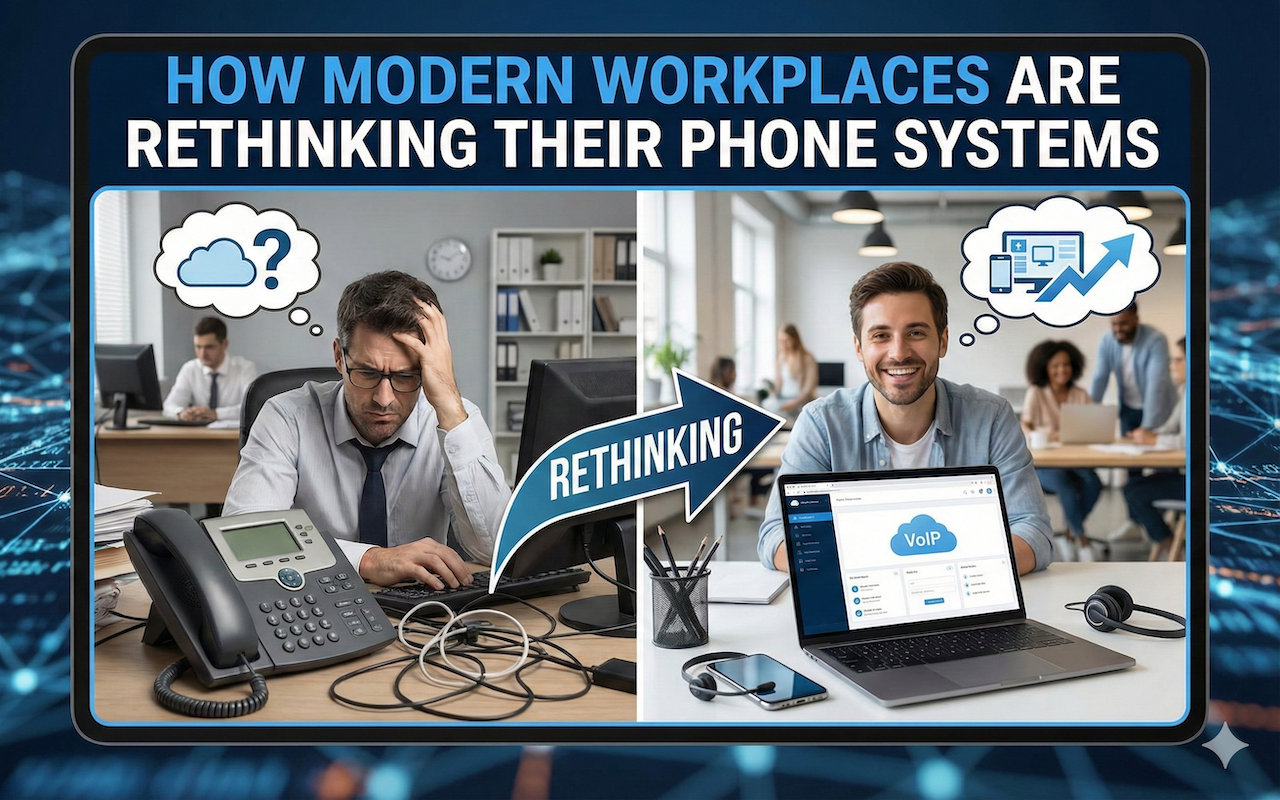
Clear communication is essential for any organization, and the tools used to support that communication have changed noticeably in recent years. Many companies are reviewing whether their current Business phone system still fits their operations, especially as more teams work in flexible, hybrid environments. With new technology available and workplace expectations shifting, businesses of all sizes are revisiting the role that phone systems play in their daily operations.
Why Communication Needs Are Changing
For many years, traditional phone lines were the standard option for most organizations. They offered basic calling features and simple functionality, but these systems were built for offices with fixed desks and limited mobility. As workplaces expanded across regions, added remote staff, and adopted digital tools, older phone systems began showing their limitations.
Employees now collaborate across different locations, and customers expect timely responses without long wait times or frequent transfers. These needs have pushed companies to look for communication tools that offer flexibility, consistent quality, and dependable performance.
The Rise of Cloud-Based Phone Solutions
Cloud-based phone platforms, often called Hosted PBX or cloud phone systems, give businesses the ability to manage calls without relying on large on-site equipment. Instead of using traditional lines, voice communication travels over the internet when the network is set up with proper Quality of Service and the recommended bandwidth of 25 Kb per second to 80 Kb per second per call in one direction.
These systems stand out because they are not tied to a single physical workspace. Staff can answer calls from the office, at home, or while travelling, using desktops, laptops, or mobile devices set up as softphones. This flexibility has become crucial for teams that are no longer in one central location every day.
Cloud systems also scale easily. Whether a company needs five extensions or several hundred, adjustments can be made quickly without installing new wiring or equipment.
Why Reliability Still Matters
Even with the shift toward digital tools, phone calls remain one of the most important ways customers communicate with businesses. Missed calls, poor audio quality, or technical issues can erode customer confidence and slow internal processes. For this reason, organizations look for voice solutions built with a focus on uptime and call quality.
Traditional phone lines once set the standard for reliability, but networks have improved enough that modern VoIP systems, with the right setup, offer stable performance across a wide range of business environments.
Supporting Hybrid and Remote Teams
As hybrid work becomes more common, companies are looking for communication tools that work smoothly across multiple settings. A cloud-based system helps teams stay connected regardless of location because it supports calling through:
- VoIP desk phones
- Softphones on computers
- Apps on mobile devices
This setup allows staff to present a unified business identity when placing or receiving calls. Customers see the company’s number, not a personal mobile number, which helps maintain professionalism.
Features such as call forwarding, voicemail-to-email with transcription, and internal IM help teams stay organized without relying on separate apps or manual processes. These tools reduce missed messages and help employees coordinate more efficiently.
Why Many Organizations Are Moving Away from Landlines
Traditional landlines require physical infrastructure, wiring, and scheduled installations. When a business grows or restructures, adding or changing lines can be slow and costly. Many companies find that these limitations no longer keep pace with modern work.
Landline-based systems also offer fewer features compared to cloud solutions. While they handle basic calling, they lack the routing, flexibility, mobility, and integration options that modern organizations often need. Because business operations change quickly, systems that can adapt with minimal delays are becoming a priority.
Different Sized Businesses, Different Needs
One advantage of cloud-based systems is how easily they adapt to businesses across various industries and sizes.
1. Small and Medium-Sized Businesses
Smaller companies appreciate that cloud systems do not require large rooms filled with hardware. They can start with a simple setup and expand as needed.
2. Large Workplaces and Call Centers
Larger teams value the ability to support large call volumes and manage many extensions. For call centers, tools such as queue management and reporting help maintain smooth operations.
3. IT Companies and Reseller Opportunities
Many IT firms add cloud phone services to their offerings. Some choose to resell or white-label these services, allowing them to support their clients without building their own telecommunication infrastructure. This arrangement lets IT providers remain trusted with advisors while partnering with a backend provider that supplies the core service. For example, a Canadian VoIP provider such as IntraTel offers reseller opportunities.
Integrating With Everyday Tools
Most workplaces rely on a combination of digital platforms, such as project management software, CRM systems, or internal communication tools. Cloud-based phone systems often integrate with these platforms, helping teams match call activity with customer records, tickets, or ongoing projects.
For example, CRM integration helps agents view caller details instantly. Voicemail-to-email with transcription ensures important messages are captured and easy to retrieve. Internal IM lets employees coordinate quickly without switching between multiple apps.
Cost Considerations for Modern Phone Systems
Although cost is not the only factor, many organizations find that cloud systems offer practical budgeting advantages. Because pricing is usually based on the number of users or extensions, companies have a predictable monthly cost. They also avoid expenses associated with maintaining physical wiring or on-premises hardware.
More important than cost, however, is the overall service quality. Canadian businesses evaluate providers based on performance, dependability, and their ability to support long-term communication needs.
The Expansion of Cloud-Based Phone Systems
Companies across USA and Canada, including those in Burlington, Hamilton, Mississauga, Oakville, Brampton, and Toronto, are adopting cloud-based communication as they explore more flexible working models. The ability to operate seamlessly across multiple regions without needing dedicated lines in each location has become a significant benefit.
Many businesses also prefer working with Canadian providers that keep calls and data within the country, aligning with local expectations for data residency and support.
Looking Toward the Future of Workplace Communication
Communication needs are evolving as businesses adapt to new ways of working. Voice calls remain essential, but the systems supporting those calls are becoming more adaptable, more remote-friendly, and easier to manage. As organizations move away from rigid infrastructure, cloud-based solutions are expected to become a standard part of workplace operations.
Companies are also looking for communication tools that can integrate with digital workflows, support mobile and hybrid teams, and scale with changing business demands. The future of business communication will likely involve deeper integration with everyday work tools, along with continued emphasis on consistent call quality and dependable service.
Conclusion
The shift toward cloud-based phone systems reflects a broader change in how modern workplaces operate. Companies want communication tools that match their pace, support their teams, and offer flexibility without unnecessary complexity. Whether a business has a small internal team or a large, multi-branch workforce, choosing a system that adapts to these needs is becoming more important each year.
Featured Image generated by Google Gemini.
Share this post
Leave a comment
All comments are moderated. Spammy and bot submitted comments are deleted. Please submit the comments that are helpful to others, and we'll approve your comments. A comment that includes outbound link will only be approved if the content is relevant to the topic, and has some value to our readers.
Comments (0)
No comment