
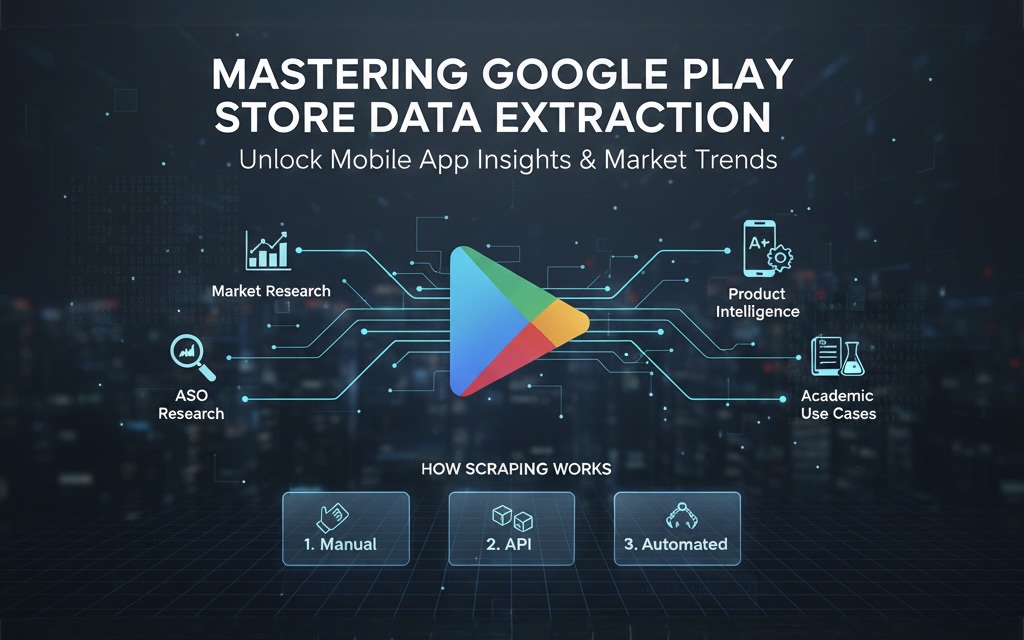
With more than 3.5 million apps and billions of interactions each month, the Google Play Store has become one of the richest open datasets for understanding mobile app trends, consumer behavior, and software performance. Whether you’re analyzing competitors, conducting market research, or studying user sentiment, the Play Store provides a vast pool of public information.
Scraping Google Play Store requires a careful balance of technical skill, responsible practices, and respect for Google’s policies. This article explains what kind of data can be collected, why scraping is useful, how it works at a high level, and what challenges and ethical considerations you should understand before getting started.
What You Can Collect from the Google Play Store
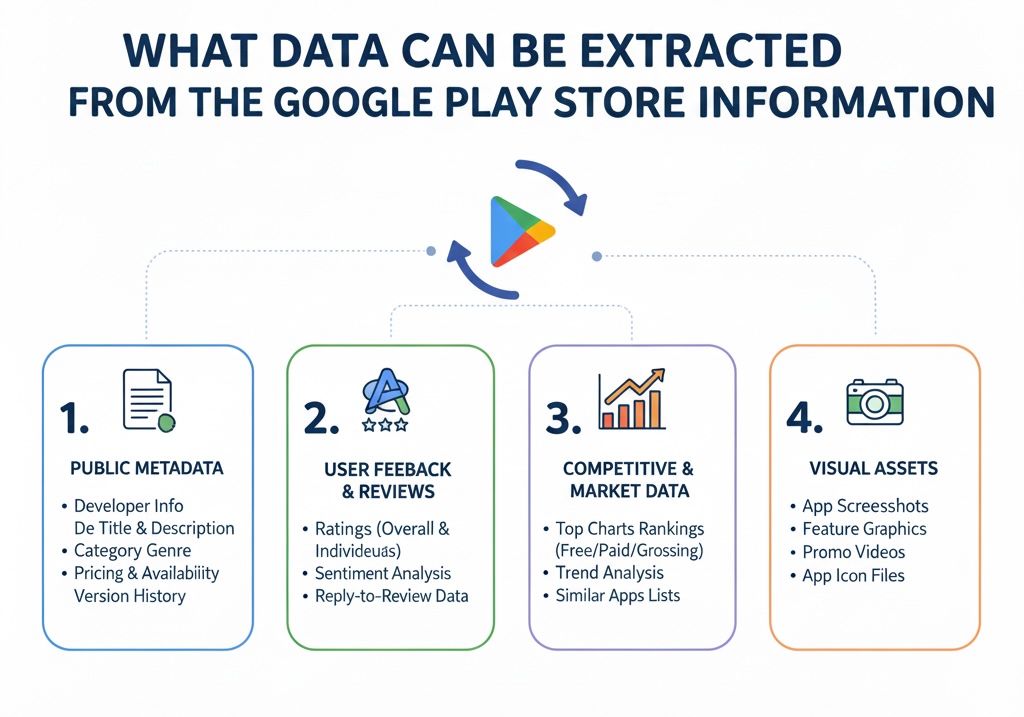
The Play Store exposes a variety of publicly available data points that researchers, developers, and analysts frequently collect. Public app metadata is often the first target. This includes the app name, developer information, category, tags, descriptions, update notes, and the package ID. Install counts, while displayed only in ranges like “10M+ downloads,” still give meaningful directional insights about growth.
User reviews and ratings are another major component. According to Google’s own internal data, more than one billion Android users leave reviews each year, creating a massive dataset for analyzing sentiment, user expectations, complaint patterns, and feature requests. Each review typically includes written feedback, a star rating, the version used, and a timestamp—making it especially valuable for longitudinal studies or tracking consumer response to updates.
Competitive and market data is also publicly visible. Analysts often track pricing changes, in-app purchase listings, content ratings, permissions requested by apps, and category rankings. This kind of information helps teams benchmark themselves against competitors or identify trends emerging within a given niche. Visual assets, such as screenshots, icons, and featured graphics, are frequently scraped as well.
Why People Scrape Google Play Store Data
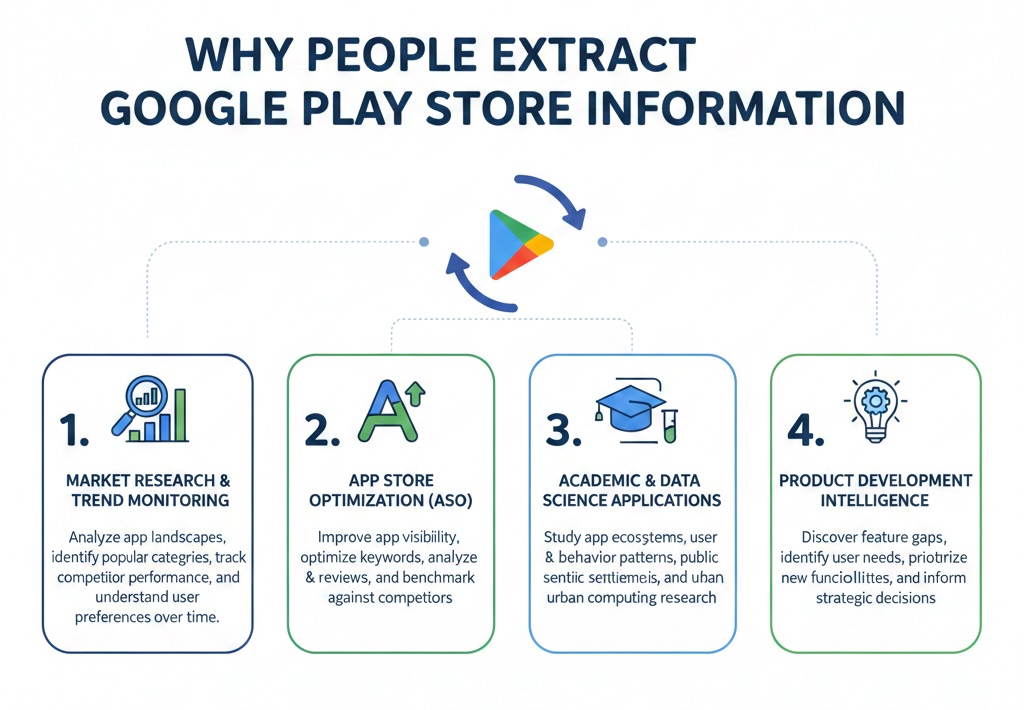
Play Store scraping is common across industries because it reveals patterns that are otherwise difficult to gather. Market researchers, for example, scrape data to monitor emerging competitors, understand seasonal download trends, or evaluate how different product categories evolve over time. A startup in the fitness space might scrape the “Health & Fitness” category to track which apps gain traction, what updates correlate with rating boosts, and how competitors respond to user complaints.
App Store Optimization (ASO) teams also rely heavily on scraped data. Keyword strategies, competitor descriptions, review sentiment, and screenshot layouts all influence how an app ranks and converts users. In highly saturated categories like gaming where more than 500,000 games compete for attention, ASO insights derived from scraped data can make or break visibility.
Academic researchers and data scientists use Play Store information for everything from building machine-learning datasets to conducting sentiment analysis. Public app reviews are among the most commonly downloaded datasets on platforms like Kaggle, underscoring how valuable they are for modeling user behavior. Product teams use scraped reviews to identify recurring pain points or feature requests, helping them prioritize improvements based on real user feedback.
How Google Play Store Scraping Works
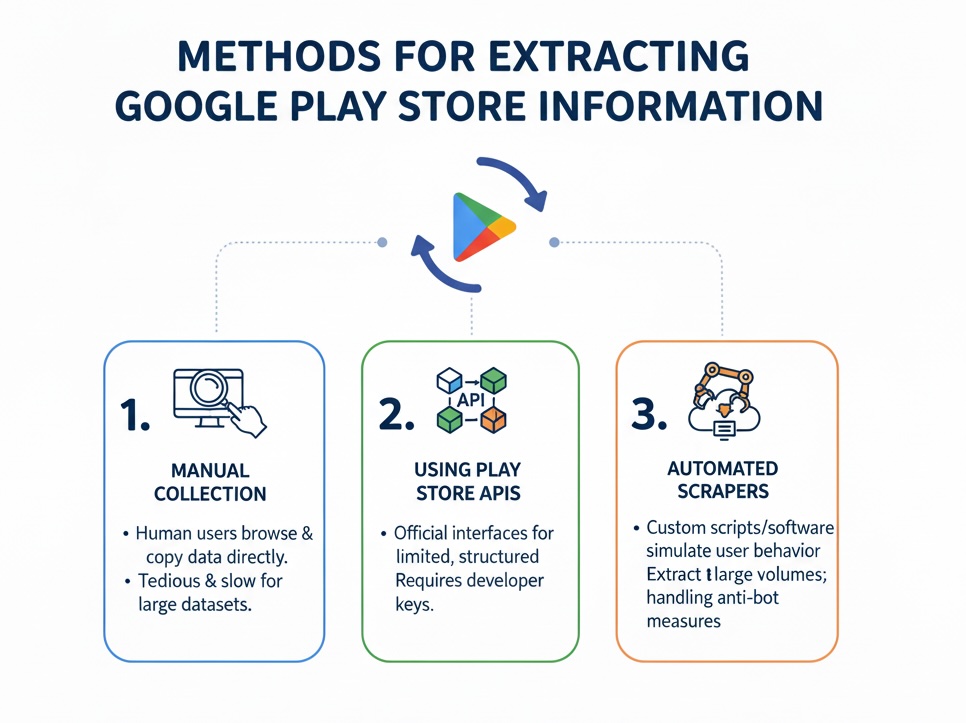
Scraping Play Store data can be done in several ways, and the approach varies depending on scale, purpose, and technical ability. The most basic method is manual collection by simply visiting pages, copying key information, and pasting it into a document or spreadsheet. While this is impractical for large datasets, it’s useful for quick checks or small-scale competitive research.
A more structured option involves using APIs. The official Google Play Developer API is the safest and most compliant method, but it only allows developers to access data related to their own apps, such as crash reports, revenue metrics, subscription data, and localized ratings. For broader market intelligence, many teams turn to third-party APIs such as Decodo API that aggregate public Play Store metadata, rankings, and reviews. These APIs are often designed specifically for ASO teams and market researchers who need large-scale insights without maintaining their own scraping infrastructure.
Automated scraping tools such as Decodo represent the most advanced approach. These tools rely on headless browsers, HTML parsing libraries, or cloud-based scraping engines that simulate human browsing behavior. They can collect large volumes of data across many app pages, but they also require careful configuration to avoid triggering Google’s rate limits, bot detection systems, or CAPTCHAs. Automated scrapers need continual maintenance because the Play Store’s structure and markup change frequently.
Challenges in Scraping the Google Play Store
Scraping the Play Store comes with several challenges, the first of which is its dynamic interface. Google regularly updates the layout and HTML structure, meaning a scraper that worked last month may break overnight. Bot detection presents another obstacle. When a scraper makes too many requests in a short period, it may encounter IP blocks or CAPTCHAs, forcing the use of rotating IPs, residential proxies, or timed delays.
Accuracy can also be an issue. Install counts are not exact numbers, but ranges. Review sorting changes based on relevance, helpfulness, or recency, which introduces variability in the data collected. App availability can also vary by country or device, meaning a scraper might capture different information depending on where the request originated.
Legal and ethical considerations are especially important. Google Play’s Terms of Service restrict certain kinds of automated data extraction. Scrapers must avoid collecting any form of personal data, and they should respect rate limits and server load. Ethical scraping means collecting only what is publicly visible, doing so responsibly, and using it for legitimate research or analysis.
Best Practices for Responsible Scraping
The most important rule is to respect Google’s Terms of Service. Whenever possible, use official APIs, especially when analyzing your own apps. If scraping is necessary, keep request volumes low to avoid putting unnecessary strain on Google’s servers. Scrapers should avoid collecting personally identifiable information (PII) from reviews or any data that wasn’t intentionally made public.
Developers and analysts should also ensure they are using scraped data for legitimate purposes such as trend analysis, academic projects, ASO strategies, or competitive benchmarking. Keeping scraping tools updated is essential because Play Store structure changes frequently. Maintaining documentation—such as scripts, logs, and rate-limit configurations—helps ensure long-term reliability and compliance.
Alternatives to Scraping
Not all insights require scraping. The Google Play Developer API offers detailed data for apps you own, including revenue trends, crash analytics, subscription metrics, and rating distributions. For broader market intelligence, third-party tools like ASO platforms and mobile market research dashboards provide ready-made datasets that eliminate the need for custom scraping. Additionally, public datasets on platforms like Kaggle can offer historical reviews, app metadata, and category-level snapshots useful for academic or exploratory research.
Conclusion
Scraping data from the Google Play Store can unlock powerful insights into app performance, user sentiment, and market trends. With millions of apps competing for attention and billions of reviews shaping public perception, the Play Store remains one of the most valuable resources in the mobile ecosystem. However, effective scraping requires careful attention to ethics, compliance, and technical constraints. By approaching the process responsibly by using APIs and respecting user privacy, developers and analysts can benefit from rich, actionable insights without compromising the rules that keep the ecosystem functional.
Images generated by Google Gemini.
Share this post
Leave a comment
All comments are moderated. Spammy and bot submitted comments are deleted. Please submit the comments that are helpful to others, and we'll approve your comments. A comment that includes outbound link will only be approved if the content is relevant to the topic, and has some value to our readers.
Comments (0)
No comment