
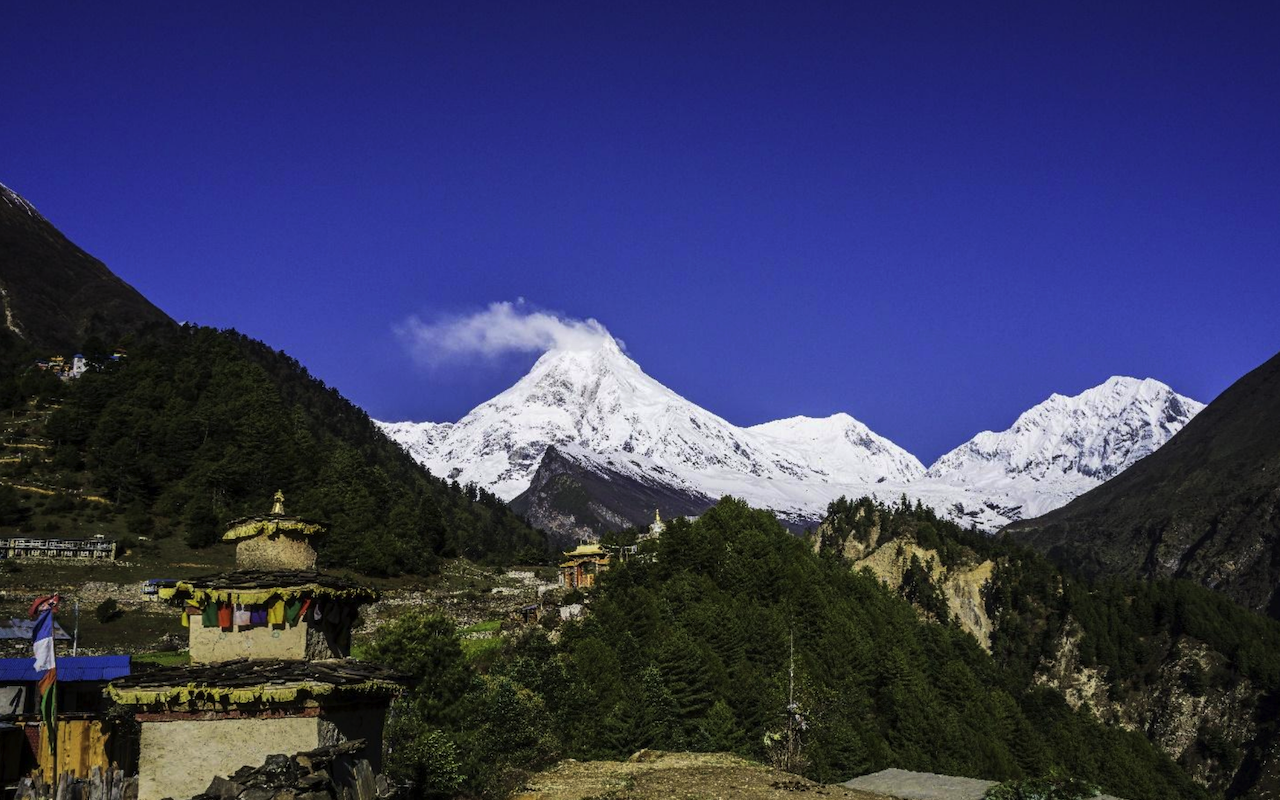
Nestled beneath the towering presence of Mount Manaslu, the world’s eighth-highest peak at 8,163 meters, lies a land shrouded in mystery, ancient traditions, and spiritual depth. The Manaslu region, often overlooked by mass tourism in favor of the more famous Everest Base Camp, is a treasure trove of natural beauty and timeless cultural heritage. Beyond the stunning landscapes, this Himalayan area is a realm where ancient mountain spirits, ghostly legends, and Tibetan Buddhist traditions intertwine, creating a profound spiritual atmosphere that touches the soul of every visitor.
The Enigmatic Spirit of the Himalayas
In the villages and valleys of Manaslu, locals speak softly of unseen forces that inhabit the mountains. These forces are not mere superstition but a living belief system that governs the relationship between humans and nature. The “Lha”, or mountain deities, are revered protectors who guard the peaks and valleys, ensuring the balance between man and the wilderness. These deities are honored through rituals, offerings, and prayers that travelers may witness as they pass through the region.
But the spiritual landscape goes even deeper. The stories of the Yeti, the mythical Himalayan “abominable snowman,” are more than folklore. Sherpa and Tibetan communities regard the Yeti not as a monster but as a sacred guardian spirit, a mysterious presence believed to watch over the high passes and forests.
At the sacred Larkya La Pass, standing at over 5,100 meters, trekkers often report an eerie sensation: the sudden stillness of the air, whispered chants carried by the wind, and fleeting shadows that vanish before they can be seen clearly. Villagers say these are the signs of ancestral spirits wandering the land, watching over the living and maintaining the natural order.
Tibetan Culture: The Heartbeat of Manaslu
Manaslu sits on an ancient trade route between Nepal and Tibet, a path traveled for centuries by merchants, monks, and pilgrims. This long history has given the region a vibrant Tibetan cultural identity, visible in the colorful prayer flags fluttering in the wind, the intricately carved mani stones lining the trails, and the centuries-old gompas (monasteries) that dot the landscape.
The people of Manaslu are predominantly of Tibetan descent, preserving a way of life that blends Tibetan Buddhism with animistic beliefs rooted in respect for nature and the spirits within. Monks chant ancient mantras that resonate through the mountain air, invoking protection and blessings for the harsh environment that surrounds them. Pilgrims perform “koras,” or circumambulations around sacred sites, walking meditative circles that honor the mountains and their protective deities.
One of the most moving aspects of this culture is the deep connection to the land. Every river, rock, and tree holds spiritual significance. The people believe that disrespecting the mountains or nature can bring misfortune, a belief that guides their interactions with the environment and visitors alike.
Sherpa Funeral Rituals: Honoring Life’s Cycle
In the Manaslu region, death is viewed as a sacred transition rather than an end. The Sherpa communities here practice funeral rituals that reflect their profound spiritual beliefs. Among the most striking is the sky burial, a tradition where the deceased’s body is offered to vultures on mountaintops. This ritual symbolizes the soul’s release and return to the natural cycle of life.
The ceremonies are elaborate and deeply spiritual, involving prayers, offerings, and community gatherings. They are designed to assist the soul on its journey to the afterlife and to bring peace to the family and community left behind.
For outsiders, witnessing these rituals offers a glimpse into the ancient worldview of Himalayan peoples, one where life, death, nature, and spirit are inseparable threads woven into the fabric of existence.
The Hidden Wisdom of Manaslu
What makes Manaslu truly unique is not just its physical beauty but its preservation of ancient Himalayan wisdom. In a world rapidly modernizing, this region remains a sanctuary of timeless traditions and spiritual practices. The mountain spirits, the reverence for nature, and the vibrant Tibetan culture remind us that humans are part of a greater whole.
For trekkers and travelers, understanding this hidden wisdom transforms their journey. The trek becomes more than just a physical challenge; it is a spiritual pilgrimage into the heart of the Himalayas. It calls for humility, respect, and openness to the unseen forces that shape this mystical land.
Share this post
Leave a comment
All comments are moderated. Spammy and bot submitted comments are deleted. Please submit the comments that are helpful to others, and we'll approve your comments. A comment that includes outbound link will only be approved if the content is relevant to the topic, and has some value to our readers.
Comments (0)
No comment