
IP geolocation is becoming one of the most powerful tools for optimizing marketing strategies and generating high-quality leads. Major brands like Shopify and InterSport have already demonstrated the effectiveness of this approach. According to FourSquare, nearly 90% of marketers agree that location-based marketing has a significant impact on campaign performance. Especially in the print-on-demand industry, where competition is intensifying and traditional tactics are losing effectiveness, leveraging geolocation data to position your brand is key to reaching customers. But how can IP geolocation transform the way you boost sales and enhance customer experience? Let’s explore this in detail.
What Is IP Geolocation and How Does It Work?
IP geolocation is the process of identifying a user’s geographic location based on their IP address. Instead of only knowing who your customers are, businesses can now understand "where" they are connecting from. This data reveals valuable context, such as country, city, or even postal code which marketers can use to deliver more relevant messages and personalized shopping experiences.
For print-on-demand (POD) stores, they can tailor product offerings, promotions, and content to match regional trends and consumer behaviors.
Location data is captured automatically when users visit a website or online store, while ensuring compliance with GDPR and CCPA regulations. Here’s how this data is collected:
- Data Collection: Every device connected to the internet has a unique IP address. IP geolocation technology uses databases or APIs to map that address to a geographic location.
- Mapping to Locations: The IP address is matched against a geolocation database to determine approximate location details, ranging from broad areas like a city or region to more specific locations depending on the database’s accuracy.
Once they have access to this data, the next steps involve adjusting and optimizing their marketing campaigns accordingly.
- Integration with Marketing Campaigns: POD businesses can feed IP data into platforms like Google Ads, Shopify apps, or email automation tools to serve targeted ads and content.
- Personalization and Targeting: With location insights, POD stores can deliver a shopping journey that feels natural for each region. From showing prices in local currencies to redirecting customers to the right storefront, personalization ensures that every visitor sees what is most relevant to them.
- Analytics and Optimization: Geolocation data provides valuable insights into regional shopping behaviors, helping businesses refine ad spend, optimize timing, and improve conversion rates.
- Fraud Prevention and B2B Applications: Beyond consumer marketing, IP geolocation also detects the organizations behind IP addresses. This is useful for B2B lead generation and preventing fraudulent activity.
Why IP Geolocation Matters for Print-on-Demand Businesses
Understanding who your customers are, what they need, and where they come from is always a crucial factor in any marketing campaign. Therefore, gaining even one of these three valuable insights through IP geolocation can help a POD business get ahead of competitors in reaching potential customers.
1. Enhancing Customer Experience
For example, a customer in Dallas, USA, would see prices in dollars and an estimated 1-day delivery time. This level of localization simplifies the shopping process, encourages faster purchase decisions, and enhances both customer satisfaction and brand loyalty.
2. Improving Operational Efficiency
Beyond customer-facing benefits, IP geolocation also helps store owners streamline operations. By tracking customer locations, businesses can identify where their main customer base is concentrated, allowing them to optimize supply chains and direct orders to the nearest fulfillment centers, reducing shipping times and costs.
For global POD stores, geolocation supports the creation of region-specific storefronts, ensuring compliance with local tax laws and shipping regulations. It also aids in demand forecasting by analyzing regional purchasing patterns, enabling businesses to stock popular designs or materials in high-demand areas. This operational efficiency reduces overhead, improves delivery speed, and enhances the overall customer experience.
3. Driving Sales With Targeted Marketing
Marketing becomes far more effective when it speaks directly to the customer’s context. With IP geolocation, POD stores can run location-based campaigns, highlight region-specific promotions, or feature trending designs in a particular market.
For instance, a store can promote winter apparel in Canada while pushing summer-themed products in Australia at the same time. This targeted approach not only boosts conversions but also prevents wasted ad spend on irrelevant audiences.
Cons of Using Geolocation
Cons of using IP Geolocation in marketing include:
- Data Inaccuracy: Users may browse through VPNs or proxies, and IP databases can misclassify locations, leading to mistargeting.
- Over-Reliance Risks: Automated restrictions may frustrate customers if they feel blocked from certain products or experiences.
- Privacy Concerns: Customers may be wary of location tracking, requiring transparent consent to build trust.
- Regulatory Compliance: Stores must adhere to GDPR, CCPA, and other data protection laws to avoid legal and financial penalties.
Key Applications in POD Marketing
While understanding why IP geolocation is valuable gives store owners the “big picture,” what truly matters is how it can be applied in day-to-day marketing activities.
1. Content Customization and Localization
One of the strongest advantages of IP geolocation in print-on-demand marketing is the ability to deliver content that feels relevant and natural to customers in different regions. Each region has its own culture and ways of expressing shopping preferences, so this customization not only improves clarity for customers but also builds trust, as shoppers feel the store is designed with their needs in mind.
This tailored approach is especially effective for brands targeting international markets, as it creates a closer connection with customers based on specific data without requiring entirely separate storefronts, helping to increase conversion rates.
2. Geo-Redirection and Store Optimization
Automatic Geo-Redirection
For POD businesses running multiple storefronts or localized domains, IP geolocation plays a crucial role in connecting customers to the right version of the store. Instead of forcing shoppers to manually choose their region, geo-redirection automatically detects a visitor’s location and routes them to the most suitable storefront by language, currency, and available shipping methods.
Beyond redirecting visitors to the right storefront, IP geolocation also streamlines what customers see:
- Show only products feasible to ship
- Seamless shopping experience
- Reduced cart abandonment due to unclear shipping rates or unexpected taxes
- Highlight local bestsellers
- Simplify checkout with relevant payment and delivery methods
- Reduce errors and build trust
SEO and Market Visibility
The impact goes beyond convenience. Geo-redirection directly supports international SEO by allowing each localized store to rank in its target market.
Such as a U.S. customer may land on a .com store optimized for domestic searches, while a German customer is directed to a .de domain tailored with VAT-inclusive pricing, German shipping providers, and local payment options. This dual advantage of user experience and organic visibility helps POD brands compete globally without fragmenting their marketing efforts.
Scaling Internationally
For global POD brands, geo-redirection and store optimization solve one of the toughest challenges of scaling internationally: how to serve diverse markets without overwhelming internal teams. By aligning the store experience with each customer’s real-world context-pricing, logistics, and cultural preferences-businesses can maximize conversions, improve satisfaction, and create a scalable framework for long-term growth.
3. Location-Based Advertising
IP Geolocation data gives POD businesses the ability to refine their advertising campaigns with extreme precision. Instead of serving generic ads, marketers can tailor campaigns to specific cities, states, or countries where demand is likely to be higher.
For example, a POD store can run a social media ad promoting winter hoodies to customers in Canada while simultaneously showing a summer-themed T-shirt collection to audiences in Australia.
By focusing on users in regions with higher demand or favorable conversion rates, POD brands reduce wasted impressions and improve ROI.
4. Analytics and Lead Generation
IP Geolocation doesn’t just help with front-end customization; it also strengthens backend decision-making. By tracking where visitors are coming from, POD stores can identify untapped markets and prioritize ad spend in regions showing organic demand.
Geolocation data can refine lead generation forms, automatically filling in country codes for phone numbers and adjusting form fields to match local conventions. These improvements reduce friction in the signup process.
Over time, insights from geolocation guide product development, inventory planning, and expansion strategies. This helps POD brands grow beyond their initial markets with data-driven confidence.
Choosing the Right Tools and Partners
Selecting the right tools and partners is essential for POD businesses that want to make the most of IP geolocation. While the technology itself offers powerful insights, its effectiveness depends on using reliable geolocation data sources and integrating them with a platform that can act on those insights.
Example: Accurate Geolocation Data Provider
Serices such as IPLocation supply geolocation data that maps customer IP addresses to cities, regions, or countries. This information can be used to adjust website content, optimize ad targeting, and tailor campaigns to match regional demand. For instance, a POD store could highlight seasonal products in specific regions or display localized bestsellers. Data providers like these also emphasize compliance with regulations such as GDPR and CCPA, helping businesses balance personalization with privacy.

Example: Print-on-Demand Platform With Geolocation Support
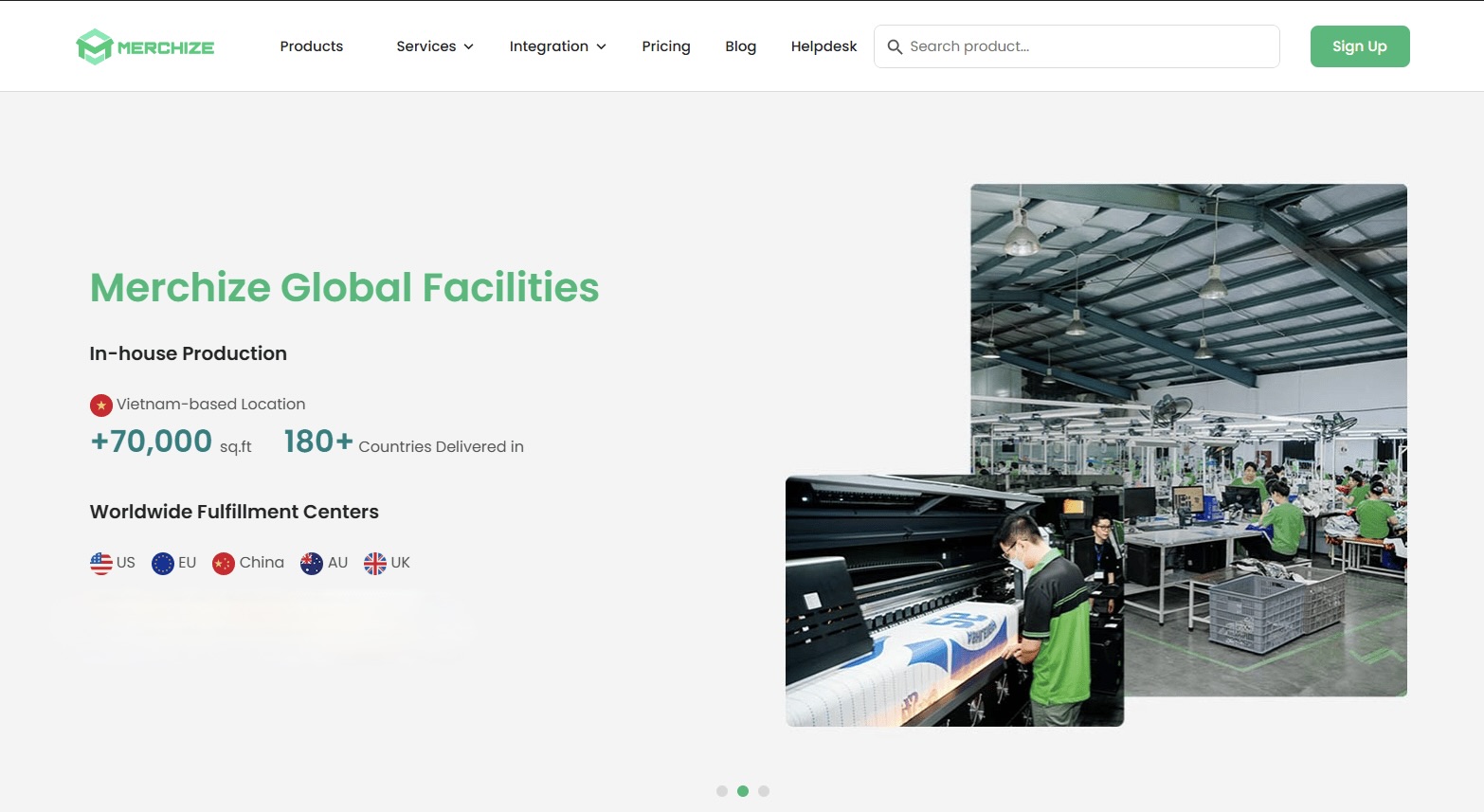
Some POD platforms incorporate geolocation features into their operations. Merchize, for example, is among the top print-on-demand companies that support global sellers by combining product variety, fulfillment across multiple regions, and integrations with e-commerce platforms such as Shopify, Etsy, and WooCommerce. By aligning geolocation insights with fulfillment networks and storefront customization, platforms like these enable POD sellers to tailor marketing strategies, improve delivery times, and enhance the overall customer experience.
Conclusion
Integrating IP geolocation into a POD strategy opens new opportunities to connect with customers on a local level. Businesses can use accurate data from providers such as IPLocation.net and pair it with platforms like Merchize to deliver personalized content, optimize storefronts, and run targeted campaigns. Combined with global fulfillment and customization options, this approach enhances the customer experience, drives sales, and supports scalable business growth. Finally, tracking performance and refining strategies over time ensures continued effectiveness and competitiveness.
Featured Image by Freepik.
Share this post
Author

Leave a comment
All comments are moderated. Spammy and bot submitted comments are deleted. Please submit the comments that are helpful to others, and we'll approve your comments. A comment that includes outbound link will only be approved if the content is relevant to the topic, and has some value to our readers.
Comments (0)
No comment