
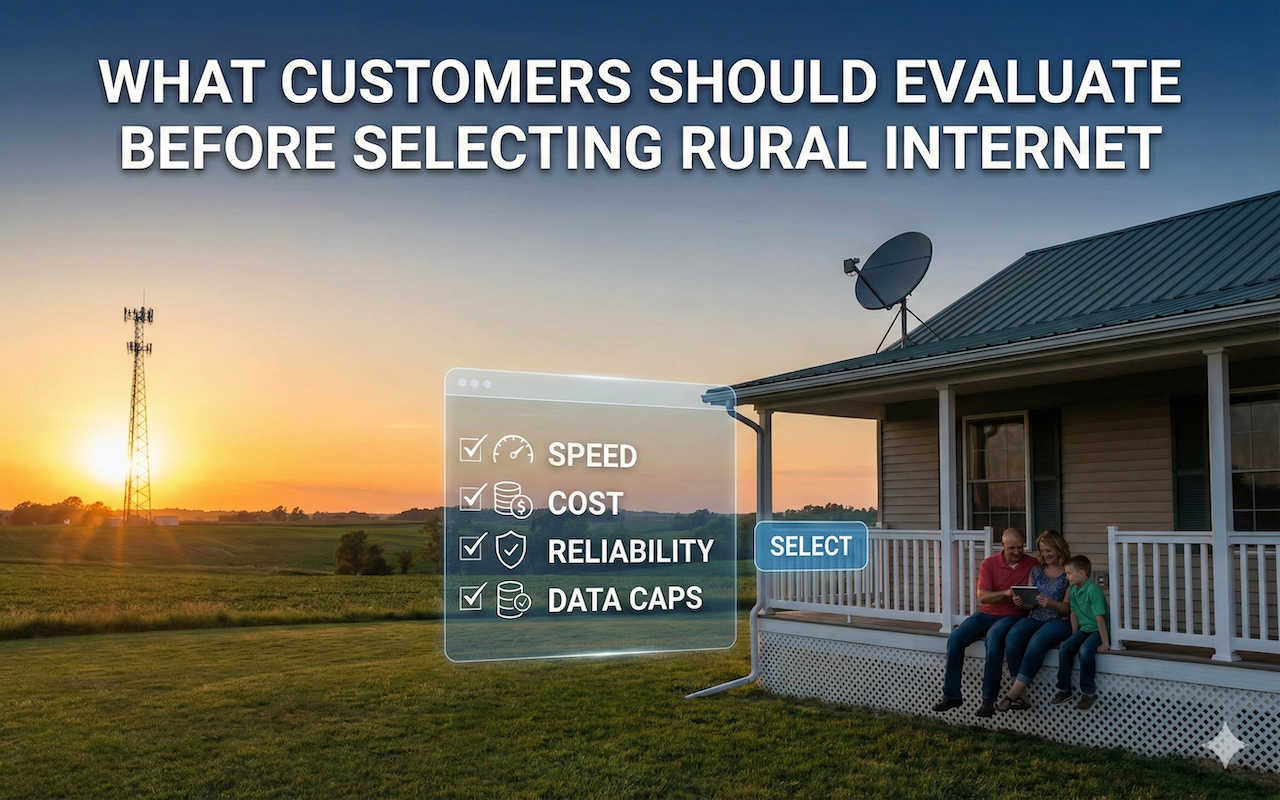
Choosing an appropriate internet service in rural areas could pose difficulty. Whether you're in the Midwest farmlands, Appalachian communities, or remote Western regions, the choice is not so simple—poor quality and few offers. However, consumers can still make informed decisions by considering the following factors.
In this guide, we walk through essential aspects to consider before picking rural internet options. Understanding what to evaluate will help ensure you select the best service for your needs and location. Let's explore the critical factors that will guide you toward making the right choice.
Understanding Internet Needs
Understanding the household's internet needs is essential for identifying suitable solutions before researching potential options. How many users are there, what types of activities will they engage in, and what internet speed is required? Example: If you are watching videos or playing online games, you require high-speed internet. On the other hand, simple surfing and email usage have fewer bandwidth needs. Identifying these needs assists in finding a suitable package that can be used.
Availability and Coverage
Due to many rural communities having only one or two internet providers, the availability and coverage may be limited. The first step in the selection is checking availability and coverage. Consumers must contact the service providers and inquire which providers are available in their area. Provider websites typically have something called coverage maps, which can be helpful as well. This procedure makes it necessary to verify that the provider provides uninterrupted care in the region.
Types of Internet Connections
In rural areas, different varieties of the internet will be available. These include satellite, DSL, fixed wireless, and mobile broadband. Each has different attributes and constraints. Satellite internet—this type is also common, but can sometimes suffer from latency. DSL uses existing phone lines and may offer slower speeds. Fixed wireless can be very reliable, but it requires a line of sight. Mobile broadband uses cellular networks, so coverage may vary.
Speed and Reliability
When it comes to choosing an internet service, speed and reliability are very crucial. They should ask for the maximum speeds being offered and the realistic average speeds at peak times. Reading customer reviews is also a good idea for assessing the reliability of the service. Intermittent outages or lagging during peak times can become frustrating. A reliable connection creates hassle-free online experiences.
Data Limits and Usage Policies
You have data caps with most rural internet services. Knowing these limits will help you avoid unexpected charges or throttling. According to the Federal Communications Commission, understanding data usage and speed requirements is essential for selecting an appropriate internet service. Some providers offer unlimited data plans, while others may charge more for exceeding the limit. A nice preventive step is to review the provider's data usage policies. It is also good to realize if the provider throttles speeds after the information cap is reached.
Cost and Contract Terms
When choosing an internet service, cost is a major factor to take into account. Shoppers should also compare shops with different providers. Installation fees, equipment prices, and monthly charges vary widely. Related guides: Understanding the contract terms is also essential. Long-term commitments may be mandatory with some providers, and others vary from month to month. Familiarity with the terms helps avoid termination fees before the course's running time has fully expired.
Customer Support
Having reliable support is very important, as you may encounter some problems that can only be solved immediately by talking to the support team. Assessing customer service quality will help you save time and effort in the future. Consumers should choose providers with active, reachable support teams. Customer reviews and provider ratings can also help gauge the quality of support. A provider with great customer service can be a big help during service interruptions.
Technological Advancements
The citizen can benefit from the rural area by staying up-to-date with technological progress. Other providers may adopt newer technologies to better serve you. Thus, improvements in satellite technology (speed and latency) have been made. By understanding these advancements, consumers can select a provider that delivers the latest technology possible.
Community Feedback
Getting locals to give you feedback could be gold. Local knowledge can also provide insight into the honest performance of ISPs, such as neighbors and local community forums. Actual experiences highlight a provider's reliability and customer satisfaction. This local knowledge will also help you make your decision more effectively.
Trial Periods and Satisfaction Guarantees
Many providers will give you a free trial or a money-back guarantee. These options give consumers an opportunity to try the service without being stuck in a long-term contract. One is well advised to take advantage of these offers. Consumers can leave without penalty if the service does not live up to its promise.
Conclusion
There are many different factors to consider when choosing a rural internet service. It means understanding special internet needs, bringing all the availability to the table, and comparing costs. Consumers will realize their decisions by assessing speed, reliability, and customer support. The selection process is also encouraged by the continuous monitoring of technological progress and community feedback. Adhering to these principles, a consumer can select a service that suits their requirements and ensure they will have a pleasant online experience.
Featured Image generated by Google Gemini.
Share this post
Leave a comment
All comments are moderated. Spammy and bot submitted comments are deleted. Please submit the comments that are helpful to others, and we'll approve your comments. A comment that includes outbound link will only be approved if the content is relevant to the topic, and has some value to our readers.
Comments (0)
No comment