
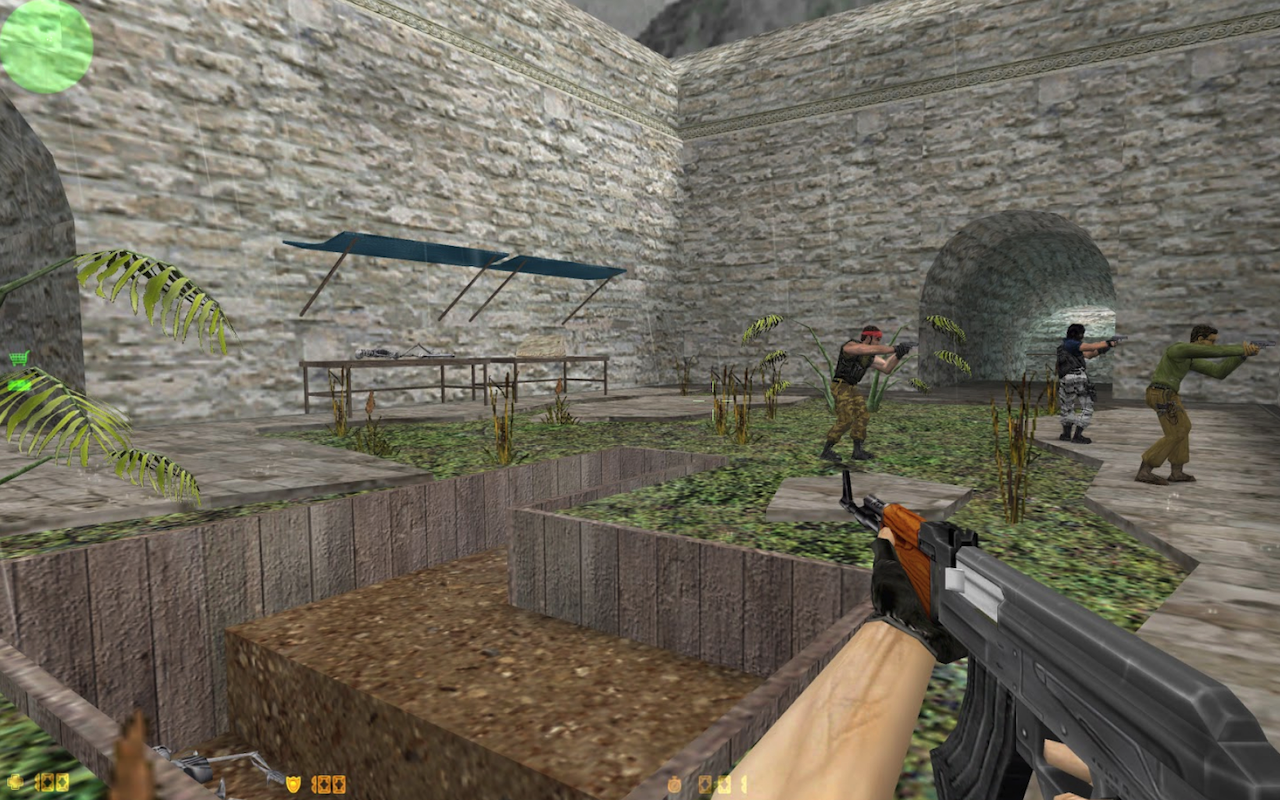
Counter-Strike 1.6, first released in 2000, is more than just a game; it’s a cultural phenomenon that has stood the test of time. Born as a mod for Half-Life, it became a cornerstone of the first-person shooter (FPS) genre, captivating millions with its raw gameplay, strategic depth, and vibrant community. Even in 2025, as modern titles dominate, Counter-Strike 1.6 continues to thrive, drawing both nostalgic veterans and curious newcomers. This article explores the reasons behind its enduring appeal, from its timeless mechanics to its role in shaping gaming culture and its accessibility for solo players through modes like CS 1.6 with bots.
The Genesis of a Legend: Counter-Strike 1.6’s Origins
Counter-Strike 1.6 began as a passion project by Minh “Gooseman” Le and Jess “Cliffe” Cliffe, two modders who built a tactical FPS that contrasted with the fast-paced shooters of the era, like Quake or Unreal Tournament. Counter-Strike 1.6 introduced a team-based formula: terrorists versus counter-terrorists, battling over objectives like planting bombs or rescuing hostages. Its release as a standalone title via Steam in 2003 solidified its place in gaming history. The game’s simplicity—minimal graphics, straightforward objectives—made it accessible to players with modest PCs, ensuring its global reach.
What set Counter-Strike 1.6 apart was its punishing yet rewarding gameplay. No health regeneration, no respawns, just skill and strategy. Players had to master weapon recoil, manage in-game currency, and coordinate with teammates. This raw intensity hooked players, creating a loyal fanbase that still fires up Counter-Strike 1.6 servers today. Its low system requirements meant it ran on nearly any computer, from cybercafés in Brazil to home setups in Eastern Europe, fostering a diverse, global community.
Iconic Maps: The Heart of Counter-Strike 1.6
The maps of Counter-Strike 1.6 are etched in gaming lore. Levels like de_dust2, de_inferno, and de_nuke are more than virtual arenas; they’re cultural landmarks. De_dust2, with its sandy corridors and iconic “Long A” and “B Tunnels,” offered balanced gameplay that suited both casual and competitive players. De_inferno demanded tight teamwork in its narrow alleys, while de_nuke challenged with verticality and complex rotations. These maps were designed with precision, balancing open spaces and choke points to encourage strategic play.
Each map in Counter-Strike 1.6 told a story. Players remember their first clutch on cs_assault or a perfectly timed flashbang on de_train. The maps’ minimalist design prioritized function over flash, ensuring clarity in heated matches. This focus on gameplay over aesthetics made Counter-Strike 1.6 timeless, as players didn’t need cutting-edge hardware to enjoy its depth. Even now, modders create new maps, keeping the game’s environments fresh while preserving its core appeal.
A Pioneer of Competitive Gaming
Counter-Strike 1.6 didn’t just entertain; it birthed the esports revolution. In the early 2000s, tournaments like the Cyberathlete Professional League (CPL) and World Cyber Games (WCG) turned players like Patrik “f0rest” Lindberg and Filip “Neo” Kubski into legends. These events, held in packed venues, showcased the game’s competitive intensity. A single defuse or headshot could shift a match, drawing roars from crowds and cementing Counter-Strike 1.6 as a spectator sport.
The game’s 5v5 format forced teams to master communication and tactics. Clans spent hours practicing rotations, nade throws, and “eco rounds” (saving money for better weapons). This emphasis on teamwork and strategy influenced modern esports titles like CS:GO and Valorant. Counter-Strike 1.6’s competitive scene wasn’t just about skill; it was about passion, with players traveling to LANs, lugging heavy monitors to prove their mettle. This grassroots spirit laid the foundation for today’s multimillion-dollar esports industry.
Community and Modding: The Soul of Counter-Strike 1.6
The community is the lifeblood of Counter-Strike 1.6. From its early days, players shaped the game through modding. Tools like Valve Hammer Editor allowed fans to craft custom maps, skins, and game modes, expanding the game’s scope. Modes like Zombie Plague, where players fought off hordes, or Surf, a movement-based challenge, showcased the community’s creativity. These mods kept Counter-Strike 1.6 dynamic, offering endless variety beyond its core modes.
Servers were virtual neighborhoods, each with its own culture. Some focused on competitive play, others on fun mods like low-gravity knife fights. Admins fostered tight-knit groups, where players returned daily to reconnect. Forums like GameBanana buzzed with shared creations, from new weapon skins to tutorials. This DIY ethos empowered players, making Counter-Strike 1.6 a collaborative masterpiece. Even in 2025, modders continue to release content, ensuring the game evolves while staying true to its roots.
Nostalgia and Accessibility
Nostalgia is a powerful force behind Counter-Strike 1.6’s longevity. For many, it evokes memories of adolescence—late nights in cybercafés, shouting over voice comms, or celebrating a clutch with friends. The game’s gritty visuals, iconic sound effects like “Fire in the hole!” and the bomb’s ticking, trigger a flood of emotions. Unlike modern games bloated with microtransactions, Counter-Strike 1.6 offers a pure experience, free of paywalls, resonating with players seeking simplicity.
Its accessibility is another key factor. Counter-Strike 1.6 runs on almost any PC, making it a staple in regions with limited hardware. This inclusivity built a diverse player base, from South America to Asia. In 2025, active servers still host thousands, with community events and tournaments keeping the flame alive. The game’s lack of reliance on constant updates or high-end graphics ensures it remains playable, a rare feat in an industry obsessed with the new.

CS 1.6 with Bots: Solo Play’s Enduring Charm
For players without access to reliable internet or friends to team up with, CS 1.6 with bots offers a compelling solo experience. Bots, introduced in later updates, allowed players to practice against AI opponents on classic maps like de_dust2 or cs_office. This mode was a godsend for newcomers learning recoil patterns or veterans refining strategies without needing a server. CS 1.6 with bots remains popular in 2025, especially for players in remote areas or those seeking a low-pressure way to relive the game.
Playing CS 1.6 with bots isn’t just about practice; it’s about freedom. You can tweak bot difficulty, experiment with weapons like the AWP or MP5, or test new map routes without judgment. For many, it’s a nostalgic solo adventure, recreating the thrill of a LAN match at home. Modders have enhanced this mode, adding smarter bots or custom scenarios, keeping CS 1.6 with bots fresh. It’s a testament to the game’s versatility, appealing to lone wolves and competitive players alike.
A Cultural Legacy That Endures
Counter-Strike 1.6’s influence extends beyond gaming. It shaped streaming culture, with early broadcasts of matches laying the groundwork for platforms like Twitch. Its economy system and map design inspired modern titles, while its community-driven spirit influenced user-generated content in games like Fortnite. In 2025, CS 1.6 with bots and online servers remain active, drawing players who crave its raw intensity or seek to introduce it to new generations.
The game’s cult status lies in its ability to balance nostalgia with relevance. It’s a time capsule of early 2000s gaming, yet its mechanics feel fresh. Whether you’re battling bots in CS 1.6 with bots or joining a server for a 5v5 match, the game delivers an unmatched sense of satisfaction. Its legacy is a reminder that great games don’t need flashy graphics; they need heart, community, and a spark that ignites passion.
Conclusion: A Timeless Cult Classic
Counter-Strike 1.6 is a monument to what gaming can be: inclusive, intense, and endlessly replayable. Its iconic maps, competitive roots, and vibrant community have kept it alive for decades. Whether you’re reliving memories through CS 1.6 with bots or fragging in a packed server, the game’s magic endures. In 2025, Counter-Strike 1.6 isn’t just a relic—it’s a living legend, proving that true classics never fade.
Share this post
Leave a comment
All comments are moderated. Spammy and bot submitted comments are deleted. Please submit the comments that are helpful to others, and we'll approve your comments. A comment that includes outbound link will only be approved if the content is relevant to the topic, and has some value to our readers.
Comments (0)
No comment