Search Engine Optimized (SEO) topics (also known as keywords) are a very common thing in today’s world which a lot of websites and blogs utilize to generate web traffic. These topics are different from other topics in that they utilize special keywords which are usually used in search engines. Because of this, these topics grant a high chance for the website which hosts them to appear on the results page of one of these searches; thus, increasing the chances of the website gaining web traffic. It is for this reason why many websites focus on publishing SEO topics; however, there are some who struggle to feasibly accomplish this.
A network is a connection between one or more nodes (devices) regardless of distance and size. They are established for the sake of communication of data between the nodes. To accomplish this, the nodes will utilize circuit switching, message switching, or packet switching to send the data through from one signal to another. They are the basis for telephone networks, computer networks, and the Internet as a whole.
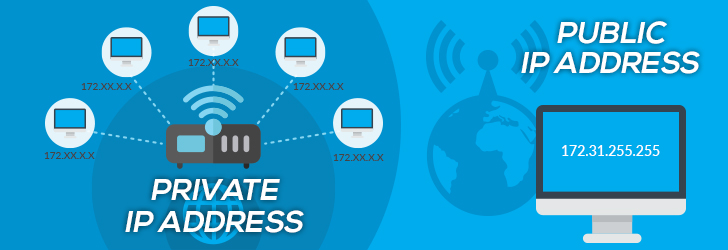
To connect your computer to the Internet, you'll need an IP address. If your computer is directly connected to the gateway (or switch) provided by your ISP, your computer gets a public IP address from your ISP. However, if your computer is connected to the Internet via a router within your home network, your computer gets a private IP address from your router and your router gets the public IP address from your ISP. To learn more about public and private IP addresses, please read What is public and private IP addresses article.
To trace an email, you'll need to locate the email header that came with the email. Every email has an email header and message body. An email may be going through a number of hops, and a header is appended with the IP address of the email server processing the email. When an email reaches the final destination, your email provider appends its IP address to the header.
Many readers of our website are contacting us for help on *allegedly* hacked IP address, and remedies for getting it back. One of the user is telling us his IP address used to be 64.3.x.y in Dallas and now it's 67.72.x.y located in Utah (per ip lookup); and hence his IP address is stolen, and his computer is running very slow and acting abnormal.
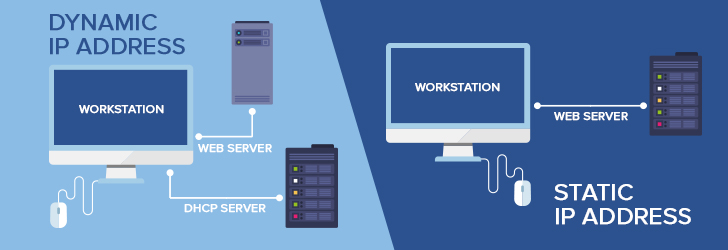
An IP address is an address assigned to a device on the Internet. A static IP address is a fixed IP address that never changes, and a dynamic IP address is an IP that is assigned by the DHCP server which may change over time.
A public IP address is an IP address that can be accessed over the Internet, and a private IP address is an IP address that is local to your private network. A public IP is a globally unique IP, while a private IP address can be reused in different networks.
Ethernet is the most widely used local area network (LAN) technology, that defines wiring and signaling standards for the physical layer of TCP/IP. Ethernet was originally standardized as IEEE 802.3 with a data transmission rate of 10 Mb/s. Newer versions of Ethernet were introduced lately to offer higher data rates. Fast Ethernet and Gigabit Ethernet support data rates of 100 Mbps and 1 Gbps (1000 Mbps) respectively. An Ethernet LAN may use coaxial cable (10Base2), unshielded twisted pair wiring (10BaseT, 100BaseT and 1000BaseT), or fiber optic cable. Ethernet devices compete for access to the network using a protocol called Carrier Sense Multiple Access with Collision Detection (CSMA/CD). With the prosperity of Internet, Wi-Fi, the wireless LAN technology standardized by IEEE 802.11, is used in hybrid with Ethernet LAN to offer portability.
Internet Protocol Version 6 (or IPv6) is a successor of IPv4 Address standard developed by IETF, which is designed to solve IPv4 address exhaustion problem. IPv4 uses a 32-bit numbering scheme to represent an IP address, which has an address space of 232 or 4.3 billion. IPv6, on the other hand, uses a 128-bit numbering scheme (2128) which has big enough address space for many decades to come. IPv6 is intended to replace the IPv4, but the introduction of the CIDR (Classless Inter-Domain Routing) allocation scheme in 1993 within the IPv4 prolonged lifespan of IPv4 Addresses. With the anticipation of smartphones, tablets, smart appliances, and other electronic devices joining the Internet every day, IPv4 address space will eventually exhaust. As of May 2014 per Google Statistics, 96% of Internet traffic is IPv4 and only 4% is represented by IPv6. IPv4 and IPv6 are not interoperable by design, so the transition from IPv4 to IPv6 requires a "transition mechanism" such as Stateless IP/ICMP Translation, Transport Relay, 6rd, and other IPv6 transition mechanisms to make them interoperable.
A Virtual Private Network (VPN) is a network technology which extends private network (such as LAN) over a public network such as the Internet. A VPN allows a computer (or a network) to be connected securely as if they are physically wired together. Corporations use VPN to allow remote workers to connect securely to their private network. A VPN is also used to interconnect remote offices with a head office as if they are physically connected.
At IPLocation.net, we prioritize the privacy and security of our visitors. We want you to feel confident and comfortable when browsing our website. That's why we want to assure you that we do not sell or share any personal information collected from our website.
Your trust is important to us. Whether you're browsing our site for information, or engaging with our content, rest assured that any data you provide remains strictly confidential. We adhere to stringent privacy policies and comply with all relevant regulations to safeguard your information.
Your privacy matters, and we are committed to maintaining the highest standards of data protection. If you have any questions or concerns regarding our privacy practices, please don't hesitate to reach out to us.