With various emerging technologies, the digital business landscape is undergoing a profound transformation.

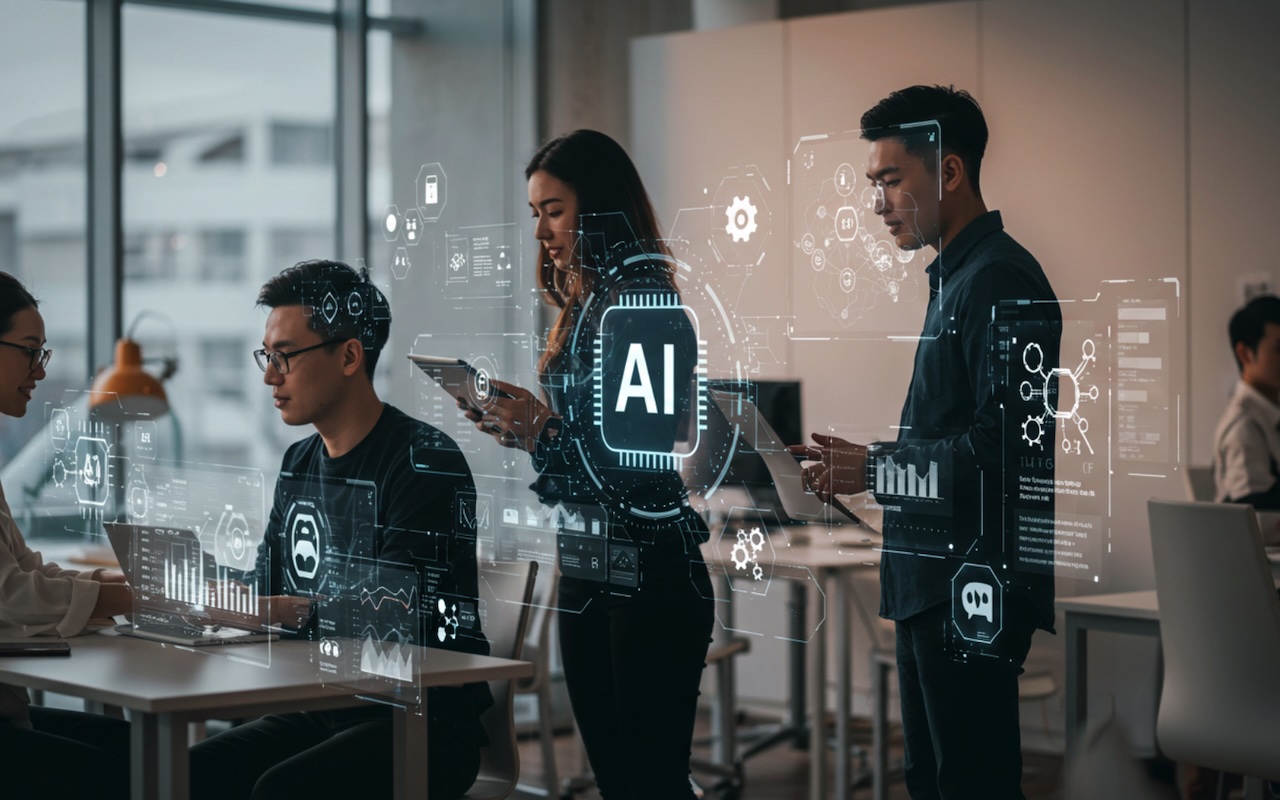
Artificial intelligence (AI) plays a crucial role in transforming international logistics. These applications enhance efficiency, optimize planning, and streamline operations, making logistics more effective and responsive. Here are some core applications of AI in the logistics industry.
The business environment today is dynamic, knowledge-driven, and intensely competitive. It is now becoming clear to many companies that their old-fashioned, reactive approach to decision-making no longer provides the strategic flexibility needed to stay in business. In this era of change, being forward-looking and ahead of the game is a valuable business commodity.
Employee onboarding has evolved dramatically. Tasks that once took weeks—paperwork, meetings, and manual coordination—are now streamlined through AI-driven digital workflows. As remote work becomes a lasting fixture in the modern workplace, these AI-powered solutions have become essential for delivering efficient and scalable onboarding experiences.
As digital video continues to dominate global communication, creators and companies alike face a major challenge: how to make their content resonate with audiences who speak different languages, live in different regions, and expect culturally relevant messaging.
Developers use AI writers to auto-generate API documentation for IP services by integrating them with source code. This integration then helps extract metadata, convert it into descriptions, generate examples, and publish them to the site. These documents are searchable, so rather than reading the docs in a separate tab, developers can search and use APIs within their code environment. With an AI writer, developers can enhance the completeness, accuracy, and accessibility of documentation.
AI (artificial intelligence) is transforming how companies approach innovation, but there’s still a significant gap between its potential and real-world implementation. Many businesses rush into full-scale AI deployment without properly validating their concepts, leading to wasted resources and costly failures. This is where AI PoC services play a crucial role. A well-executed proof of concept (PoC) acts as a bridge between theoretical AI capabilities and practical business value, helping companies test assumptions, validate approaches, and refine strategies before making major investments.
Artificial intelligence is changing the interior design industry, simplifying the complicated process of space planning into one that is intuitive and accessible. Industry predictions estimate that the AI design market will skyrocket from $20 billion in 2025 upwards to $60.6 billion by 2030, with a remarkable CAGR of 24.9%.
Production of quality YouTube videos no longer requires a complete production team. The capability of AI video platforms, such as AI Studios and InVideo, enables anybody to quickly generate video content based on scripts, blogs, and ideas in 2025 with ease.
Choosing the right AI Proof of Concept (PoC) development company is crucial to validate your AI ideas quickly and effectively before committing to full-scale projects. The ideal company should combine technical expertise, rapid prototyping capabilities, and a clear understanding of your business needs.